The party planning checklist: from idea to doors open
By Raziel Tabib, co-founder of Mesibash
You don't need an events degree or a wedding-planner binder to throw something great. What you need is to make a handful of decisions in the right order, early enough that none of them becomes an emergency. That's really all a party plan is: sequencing.
We've watched a lot of events come together (it's our job), and the ones that feel effortless on the night are almost never the ones with the biggest budget — they're the ones where the host decided things three weeks out instead of three hours out. Here's the sequence.
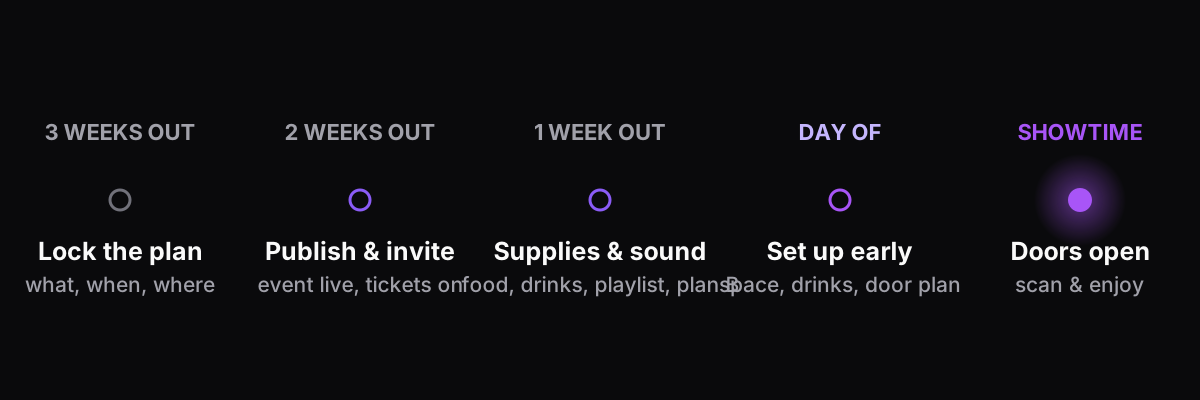
Three weeks out: lock the what, when, and where
Everything else in your plan depends on three decisions, so make them first and make them final:
- When. Pick the date before polling everyone — a poll with 30 people never converges. Choose a date, announce it, and let the calendar do the filtering.
- Where. Home, rooftop, rented space, a park at noon — the venue sets your capacity, your noise ceiling, and your end time. Confirm all three before you invite a soul.
- How many. A number, not a vibe. "About 40" tells you how much space, food, and drink you need, and whether you should be selling tickets or just collecting RSVPs.
Then sketch the budget in five lines: space, food, drink, music, everything else. If the total makes you wince, this is the moment to decide on a ticket price — not after you've spent the money. Hosts on Mesibash keep the full price they set, so the math is honest: a $10 ticket is $10 toward the night.
Two weeks out: publish the event and invite
The single biggest upgrade you can make to attendance is replacing "the plan is somewhere in the group chat" with one link that has everything: what, when, where, and how to get in.
- Create the event page and make it look like something worth leaving the house for — a real cover image, a time, a place (or a neighborhood, with the address revealed to ticket holders later, if it's that kind of party).
- Decide public or private. Private with a shared link keeps it yours; public puts it in front of people you haven't met yet.
- Turn on tickets — free RSVPs count. Even for a free party, "get your ticket" creates a moment of commitment that a thumbs-up emoji never will. If you're charging, consider an early-bird tier: a lower price for the first N tickets rewards the friends who commit early and gives everyone else a reason not to wait.
- Send the link everywhere your people are, once. Not daily. You have a reminder coming later.
One week out: supplies, sound, and plan B
Now the logistics, while there's still time to fix what's missing:
- Food and drink: scale to your ticket count, not your guess — this is where selling tickets pays off twice, because you know how many are coming. Buy more ice than you believe in. Double it. Still not enough.
- Sound: a playlist that's three hours longer than the party, a speaker that's louder than you think you need, and a phone charger parked next to it.
- Plan B: outdoors needs a weather fallback; indoors needs a neighbor strategy (telling them beforehand converts most complaints into shrugs, and inviting them converts the rest).
- Help: recruit one friend for the door and one for restocks. Two people saying yes this week beats five people "probably" saying yes on the night.
Day of: set up early, then stop
Set up so that you're done one hour before doors — space cleared, drinks cold, playlist on, lights lower than usual. That last hour is yours: eat something, shower, sit down. A host who spent the party running errands wasn't at the party.
The one thing to genuinely plan rather than improvise is the door. Decide now: who lets people in, and how do they know who's on the list?
At the door: check in without the chaos
The door is where good parties leak — strangers wander in, friends-of-friends multiply, and whoever's holding the list spends the night as a bouncer instead of a guest.
The fix is boring and total: QR tickets, scanned at the door. Every guest already has their ticket on their phone; each ticket works exactly once, so a screenshot forwarded to five people gets exactly one person in. On Mesibash you can hand the job to a friend with a scanner pass — a link and a PIN, no account, no app — and take it back whenever you want. You see check-ins tick up in real time, which is also the nicest dashboard a host has ever had: it's your people, arriving.
After: the part everyone forgets
Within a day or two, while it's still warm: post the photos where your guests will see them, thank the friends who worked the door, and write down the two things you'd do differently. Then — this is the real secret of people who "always throw great parties" — pick the next date. Hosting is a muscle. The second event is easier than the first, and by the third, you have a thing people clear their calendars for.
Frequently asked questions
How far in advance should I plan a party?
For a private party of 20–50 people, three weeks is a comfortable runway: week one to lock the date, place, and budget; week two to publish the event and invite; week three for supplies and logistics. Bigger or ticketed events benefit from 4–6 weeks so guests can plan (and buy) ahead.
What should I do first when planning an event?
Lock the three decisions everything else depends on: when it happens, where it happens, and roughly how many people you want there. Every other choice — budget, food, music, tickets — flows from those three.
How do I get people to actually show up?
Send one link with everything on it (time, place, tickets or RSVP) instead of a group-chat thread, invite two weeks ahead, and send one reminder 24–48 hours before. A small ticket price — even $5 — dramatically improves turnout, because people show up for what they've paid for.
Should I charge for my party?
If the event costs you real money, yes — and it doesn't have to feel awkward. Frame it as covering the night (drinks, food, music) rather than profit. On Mesibash there are no subscription or listing fees and you receive the full price you set, so a $10 ticket means $10 toward the party.
How do I check guests in at the door?
Don't work from a paper list or memory — give each guest a QR-code ticket and scan at the door. On Mesibash, each ticket scans exactly once, and you can hand door duty to a friend with a scanner pass (a link and a PIN) — no account or app install needed.
Hosting an event?
Create it on Mesibash in minutes — no subscription, and you keep the price you set.
Create your event